
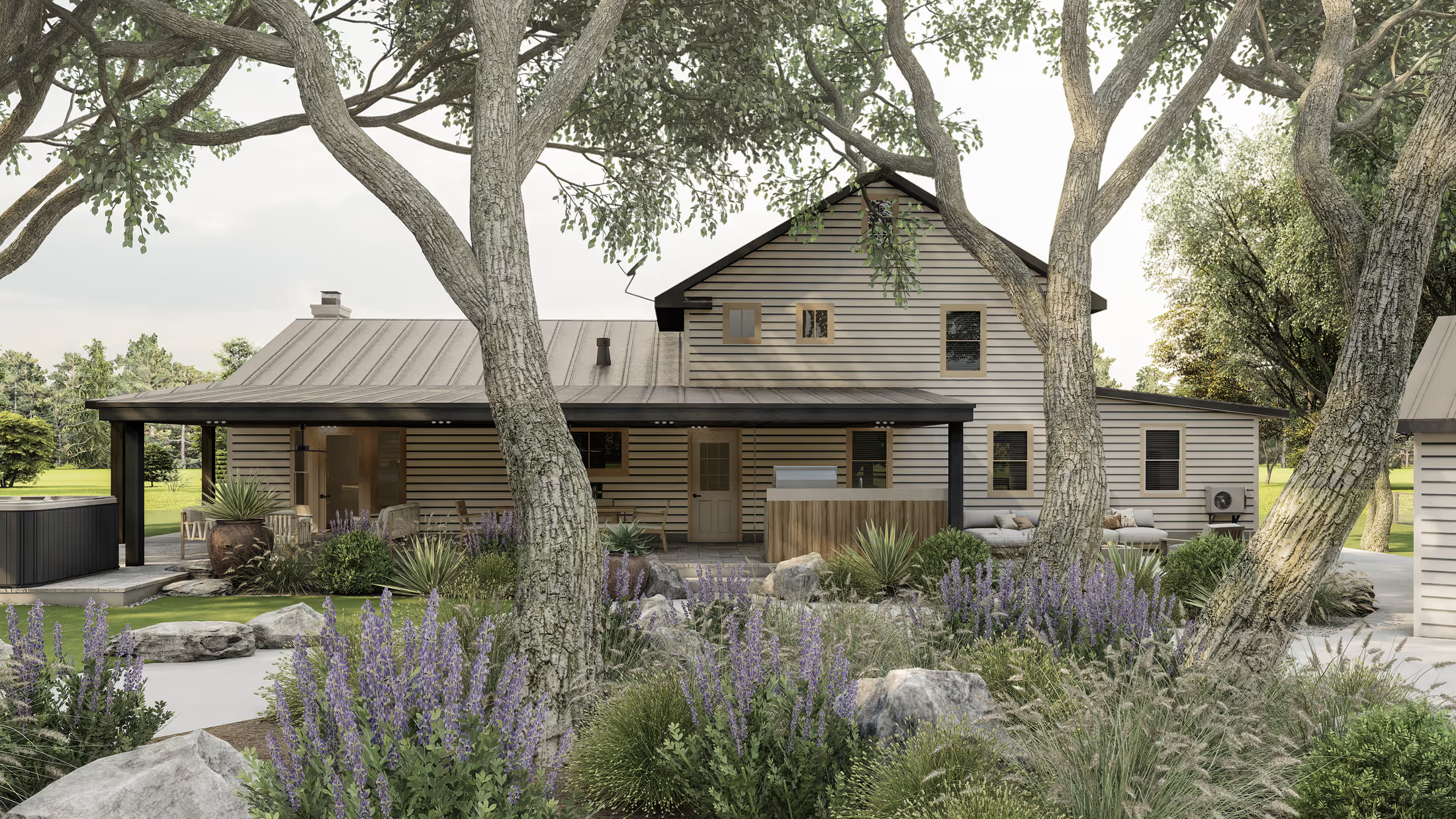
Landscape design in North Carolina
Southern warmth, shaded rooms and gardens that thrive in the heat.
North Carolina runs from Blue Ridge mountain slopes to the Piedmont's rolling red clay to the sandy coastal plain and Outer Banks. Summers are hot and humid, winters mild to cold, and rain falls year-round, sometimes in heavy bursts.
That climate is ideal for lush, layered gardens and for living outdoors, shaded porches, fire pits and kitchens are used for most of the year. The design job is to manage clay and water, protect the trees you have, and plant for the long humid summer.
What North Carolina asks of a landscape.
01Red clay and drainage
Piedmont clay holds water and compacts easily. We plan raised beds, drains and soil improvement, and make sure patios and paths are well-based so they do not shift.
02Humidity and shade
Hot, wet summers demand ventilation and shade. We plan breezy, shaded porches and pergolas, and choose plants that tolerate humidity and resist fungal disease.
03Mountain slopes and coast
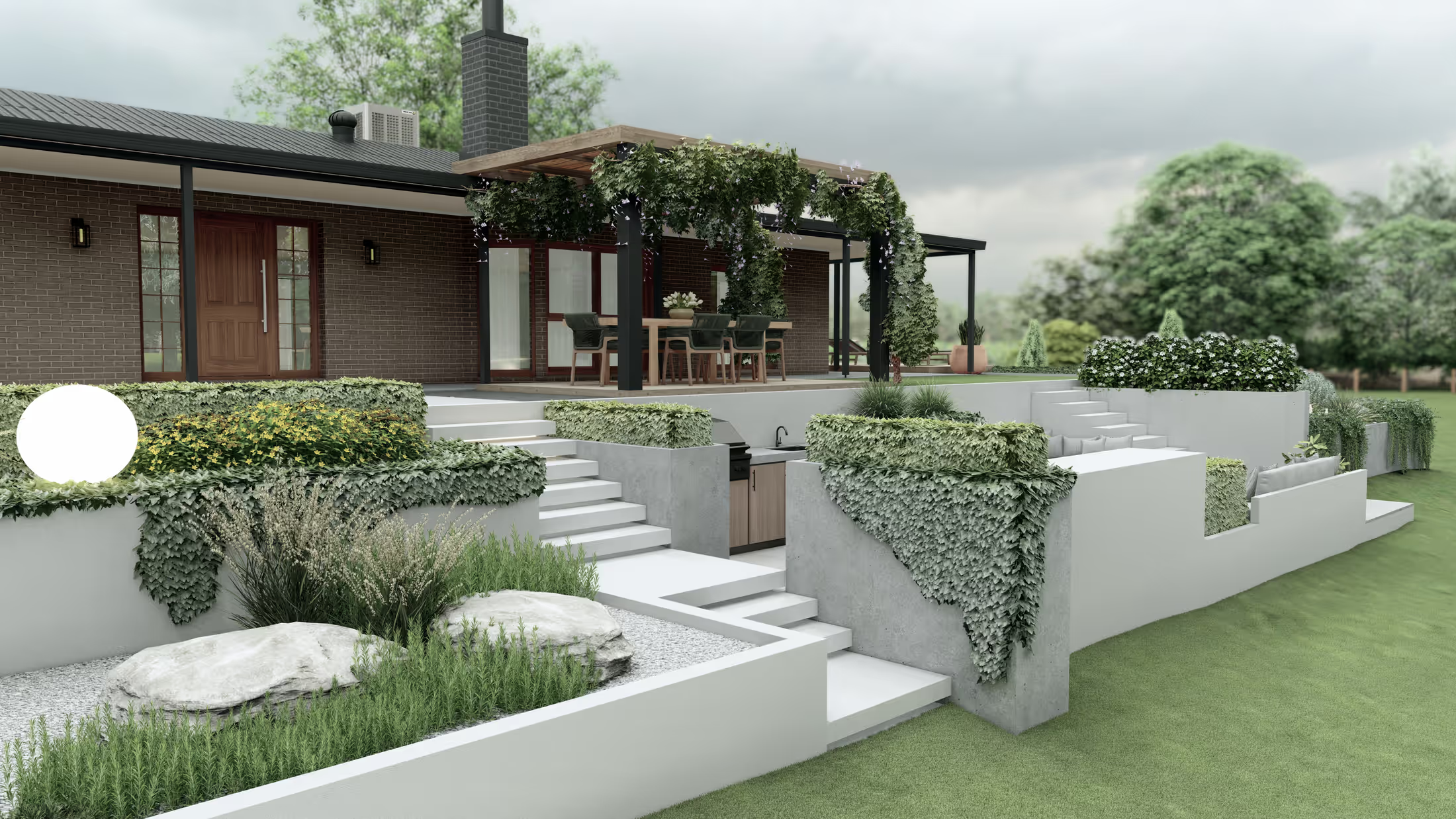
Terraced retaining walls and stepped paths suit the foothills and mountains; salt-tolerant planting and wind-firm trees suit the coast.
04Storms and trees
Summer thunderstorms and the occasional tropical system test trees and structures. We protect existing trees, avoid weak species near the house and anchor structures to engineering specs.
Related work.
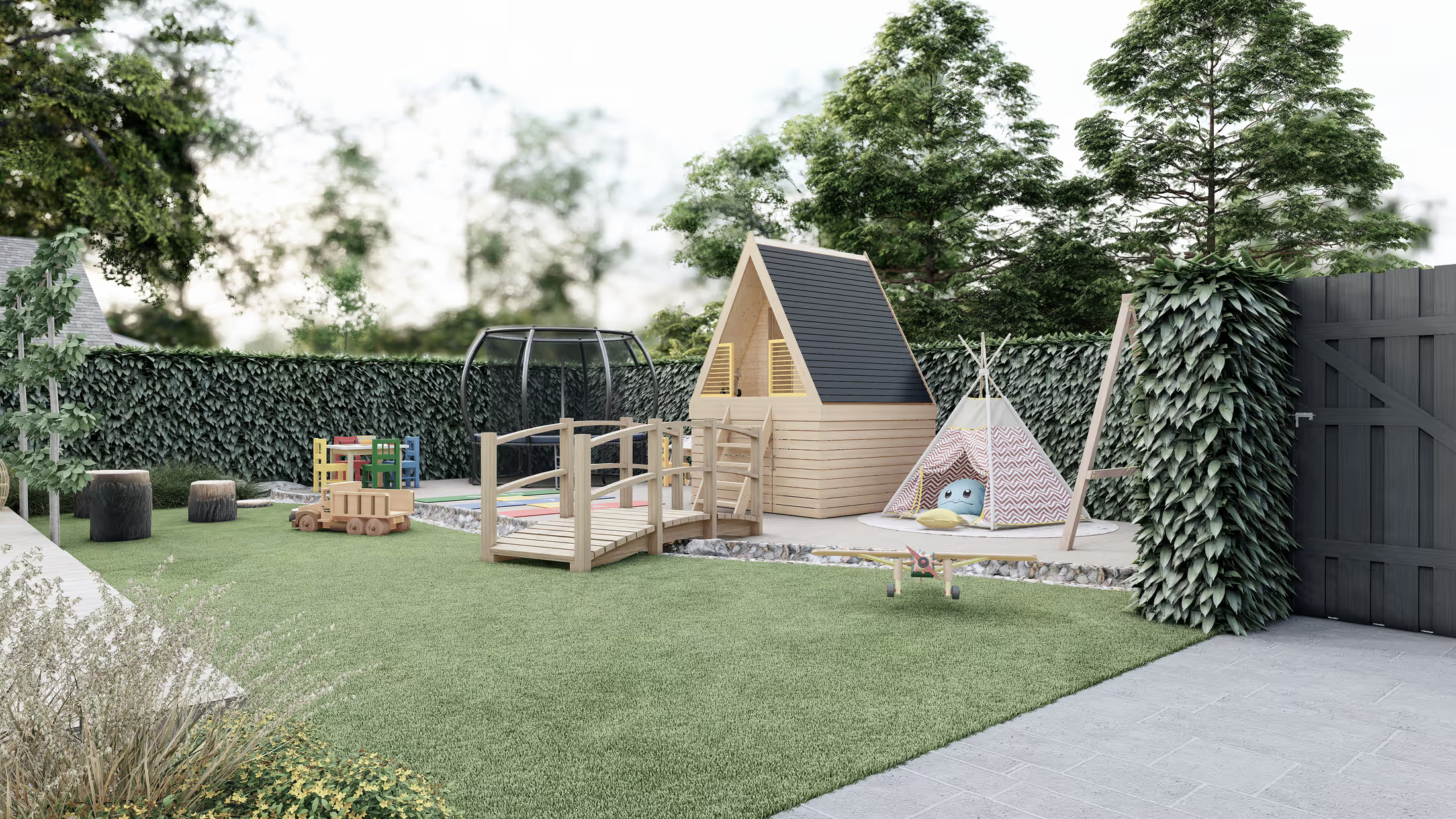
Projects from my portfolio whose planting, materials or layout would suit a home in this region. Each case study notes where it is.
Plants that earn their place in North Carolina.
A starting palette, not a prescription. The real list depends on your zone, soil, exposure and the look you want.
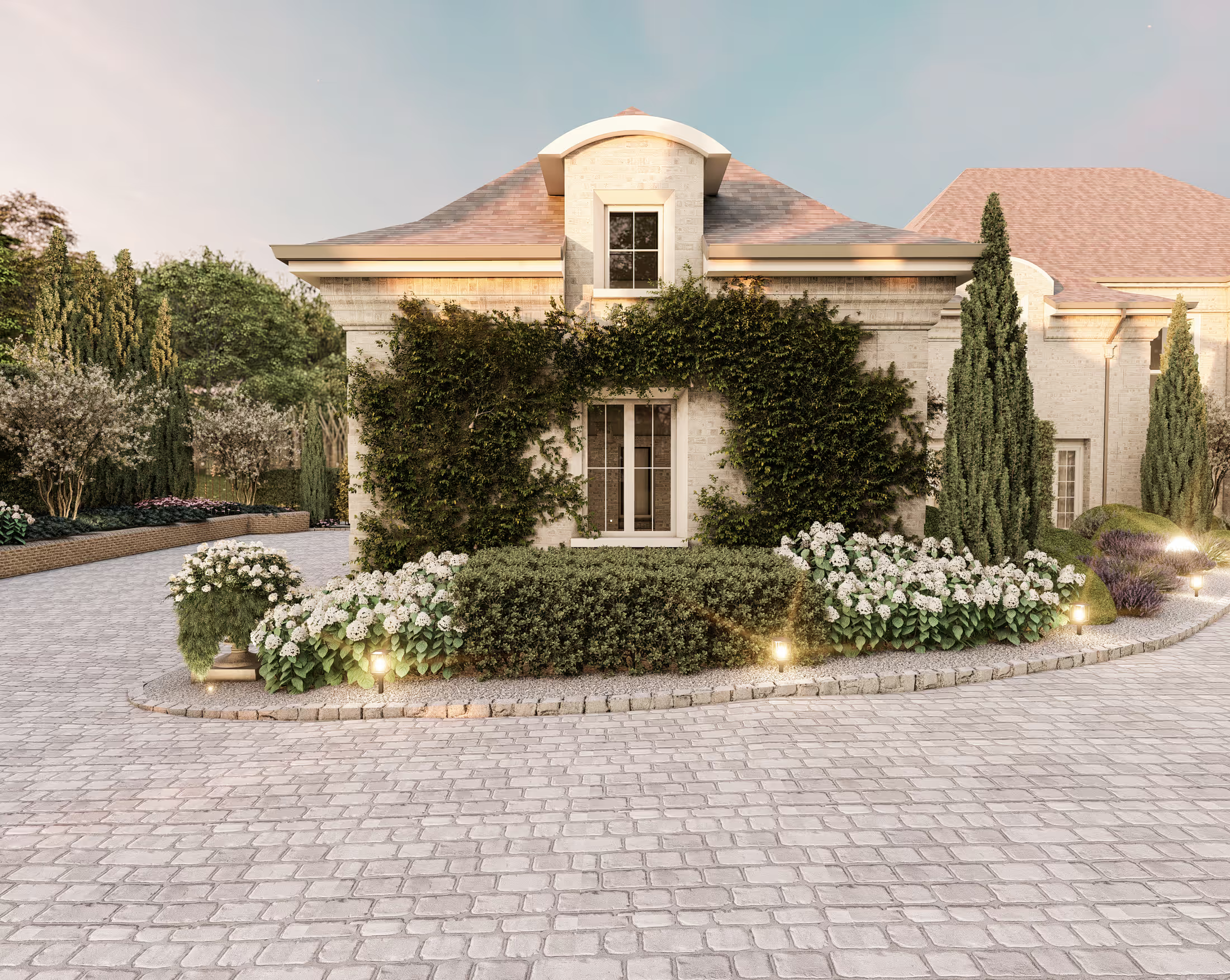
Oakleaf hydrangea
Hydrangea quercifolia
A native shrub with big blooms, fall colour and winter bark.
Virginia sweetspire
Itea virginica
Fragrant spring flowers and red autumn foliage; thrives in wet soil.
Little Gem magnolia
Magnolia grandiflora 'Little Gem'
A compact evergreen with fragrant blooms.
Switchgrass
Panicum virgatum
Upright native grass; adapts from damp to dry.
Coneflower
Echinacea purpurea
Hardy summer bloom that supports pollinators.
Fothergilla
Fothergilla gardenii
Spring bottlebrush flowers and brilliant fall colour.
Crape myrtle
Lagerstroemia spp.
Summer bloom and peeling bark; choose mildew-resistant forms.
Hellebore
Helleborus spp.
Winter and early-spring flowers for shady corners.
Built from what lasts here.
Local stormwater, tree-protection and HOA rules vary by town. We give you detailed plans; your contractor confirms permits.
Brick and fieldstone
Traditional Southern materials for walls, steps and patios.
Bluestone and porcelain
Durable paving that handles humidity and temperature swings.
Cedar and painted wood
Pergolas, screens and porches with a Southern character.
Permeable pavers
Help manage stormwater in clay soils.
Designed remotely. Built locally.
01
Send what you have
Photos, a rough sketch or measurements. A survey or a drone video helps if you have one.
02
See the first concept
Within about a week, a first design direction and 3D visuals so you can react to something real.
03
Refine together
Revisions are part of the process until the layout, materials and planting feel right.
04
Build from the files
Final renderings and contractor-ready CAD plans for your builder to price and construct.
Landscape design in North Carolina: your questions
Yes. We include drainage, soil strategies and stormwater paths on the plan, and select plants that do well in clay and humidity.
Yes. Terraced walls, steps and native planting adapt to slopes and views, with notes where an engineer should be consulted.
Absolutely. We draw them to scale with seating, circulation and shade so your builder can price them accurately.
No. I work remotely, the way architects and builders have long shared plans. You send photos, measurements and goals, and we refine over calls and messages. Your local contractor handles on-site work and North Carolina-specific permits.
Photorealistic 3D renderings of your space and contractor-ready CAD plans with dimensions, materials and quantities, in the formats your builder needs. Revisions are built into the process.
Planning a North Carolina yard? Send me the space.
Photos, a rough sketch, a Pinterest board: whatever you have is enough to begin. Most projects go from first message to build-ready files in a few weeks.