
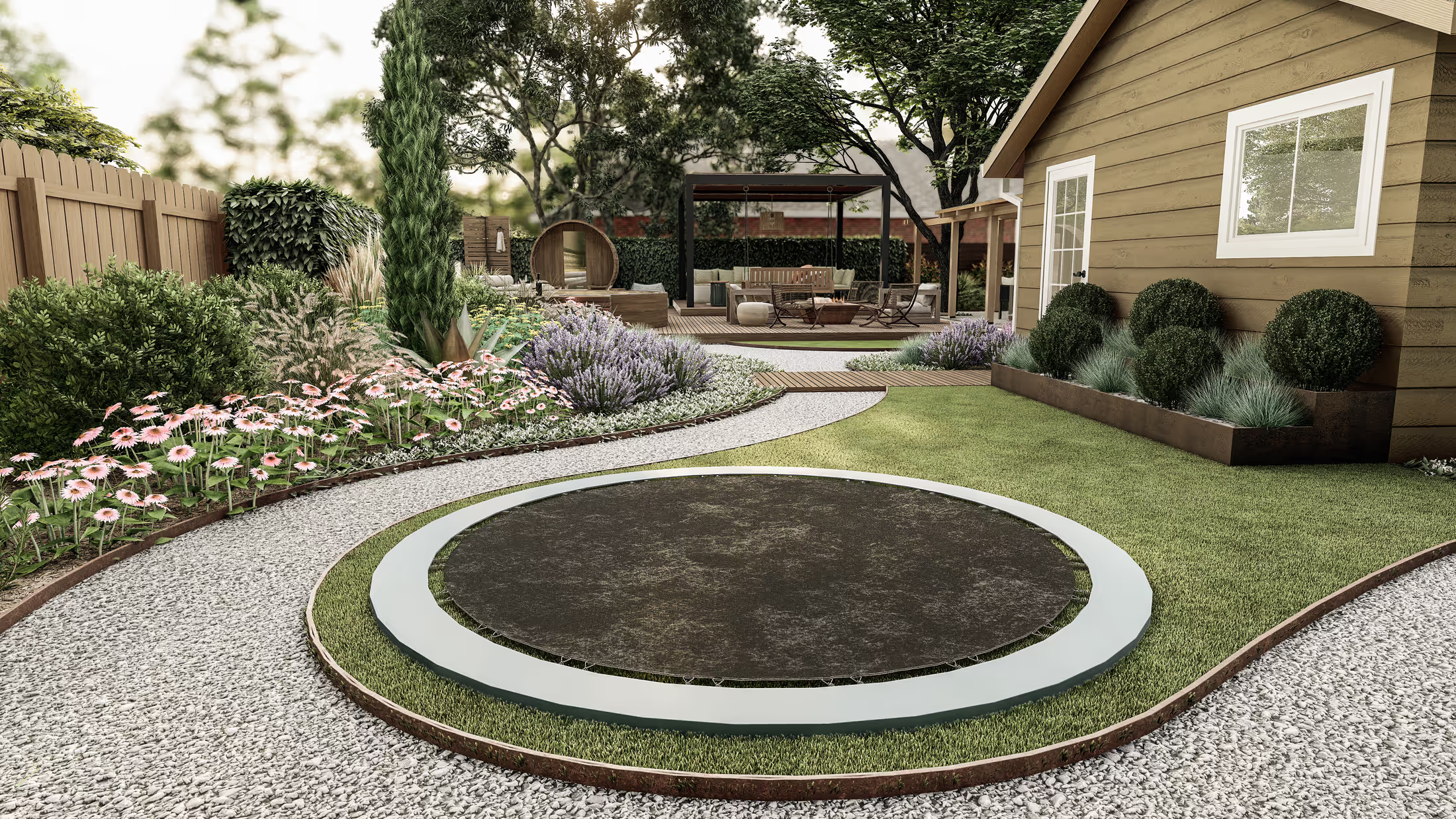
Landscape design in Texas
Built for the sun, the clay and the storm.
Texas is a continent in itself. The Hill Country has thin limestone soil and deer on every ridge. Houston and the Gulf side run humid and flat with heavy clay. North Texas swings from drought to flood. A plan that works in Austin will not work unchanged in Amarillo.
What does carry across the state is how people use their yards: long dinners outside, big shaded patios, a grill that works for a crowd, and a pool when the summer demands it. Good design makes all of that comfortable and puts the plantings to work rather than just decorating them.
What Texas asks of a landscape.
01Soil first
Expansive clay moves with moisture and can crack slabs and walls; thin limestone soil drains fast and starves roots. Foundations, edges and planting beds are detailed for what is actually in the ground. We note where a soil test or geotechnical advice makes sense before anything heavy is built.
02Oaks, oak wilt and tree care
Live oaks and mesquite are the bones of many Texas yards. We plan patios and paths outside critical root zones and note pruning timing, since in oak-wilt areas cutting wounds in the warm season is a risk your arborist will want to avoid.
03Deer, drought and water limits
Many cities run stage-based watering restrictions in summer. We build the garden around deer-resistant, drought-tough plants and put the water-hungry elements where they get the most use and the best shade.
04Outdoor rooms that earn the heat
Deep covered patios, ceiling fans, outdoor kitchens and fireplaces turn the yard into the best room of the house. We draw them to scale so the roofline, venting and circulation work with your architect or builder.
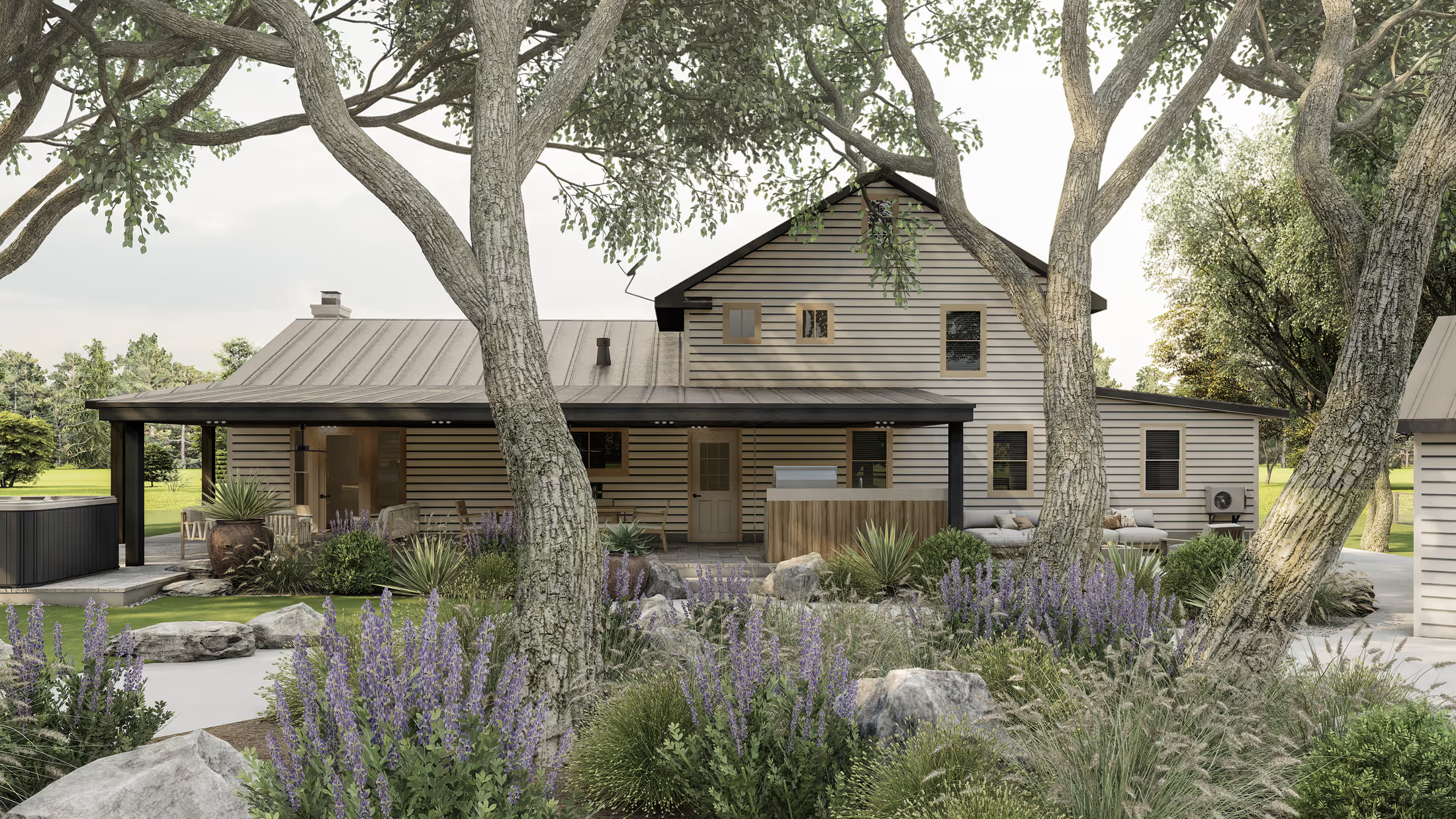
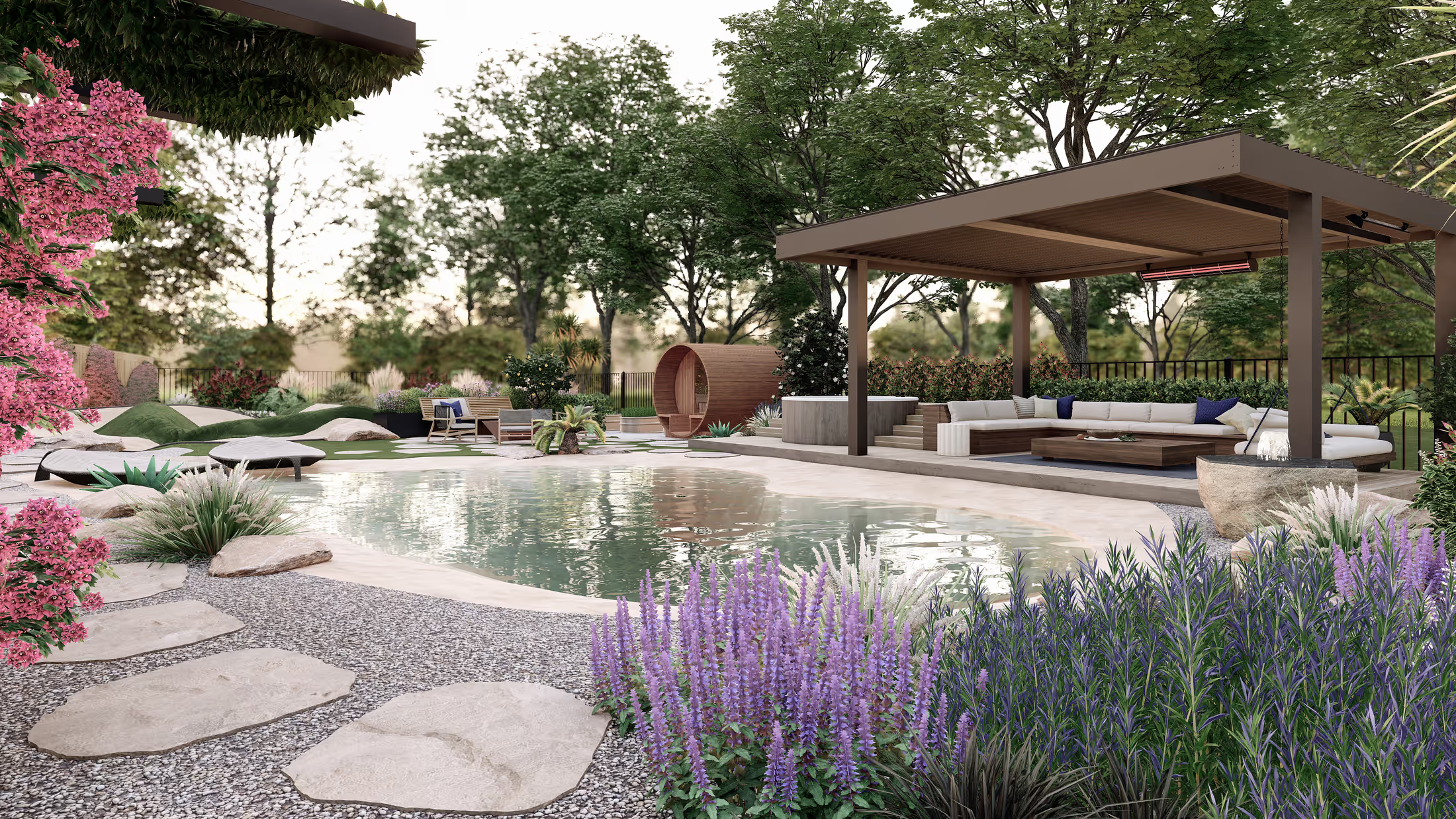
Recent work in Texas.
Landscape design projects in Texas.
Plants that earn their place in Texas.
A starting palette, not a prescription. The real list depends on your zone, soil, exposure and the look you want.
Texas sage
Leucophyllum frutescens
Silver foliage that blooms after summer rain, tough and low-water.
Pink muhly grass
Muhlenbergia capillaris
A cloud of pink plumes in fall; excellent massed along drives and beds.
Live oak
Quercus virginiana
The classic Texas shade tree for large lots, with proper space for roots.
Turk's cap
Malvaviscus arboreus var. drummondii
Shade-friendly, hummingbird-attracting, and deer-tolerant.
Salvia greggii
Salvia greggii
A reliable, long-flowering shrub for hot, sunny beds.
Yaupon holly
Ilex vomitoria
A native evergreen for hedging, screens and clipped forms.
Agave & yucca
Agave, Yucca spp.
Architectural accents for limestone and gravel gardens.
Texas mountain laurel
Sophora secundiflora
Fragrant spring blooms and a compact evergreen form.
Built from what lasts here.
Requirements vary widely by city, flood zone and HOA. We provide buildable drawings, and your contractor or engineer confirms local permits, setbacks and drainage rules.
Limestone
Local stone for walls, steps and paving; it ages beautifully and belongs to the place.
Timber ceilings & steel posts
Warm, durable materials for covered patios and pergolas.
Gravel and decomposed granite
Drains well and suits the hill-country planting palette.
Light paving
Reflective surfaces keep patios and pool decks cooler in summer.
Designed remotely. Built locally.
01
Send what you have
Photos, a rough sketch or measurements. A survey or a drone video helps if you have one.
02
See the first concept
Within about a week, a first design direction and 3D visuals so you can react to something real.
03
Refine together
Revisions are part of the process until the layout, materials and planting feel right.
04
Build from the files
Final renderings and contractor-ready CAD plans for your builder to price and construct.
Landscape design in Texas: your questions
Yes. We draw terraces, stepped walls and drainage to scale, and choose planting suited to shallow, alkaline soil, then detail it so your builder can price and place everything.
Yes. We keep structures out of critical root zones, lean on canopy for shade, and note pruning and construction practices to protect the trees.
We choose plants proven for your region, including sturdy native and adapted species, and note which tender choices need winter protection.
No. I work remotely, the way architects and builders have long shared plans. You send photos, measurements and goals, and we refine over calls and messages. Your local contractor handles on-site work and Texas-specific permits.
Photorealistic 3D renderings of your space and contractor-ready CAD plans with dimensions, materials and quantities, in the formats your builder needs. Revisions are built into the process.
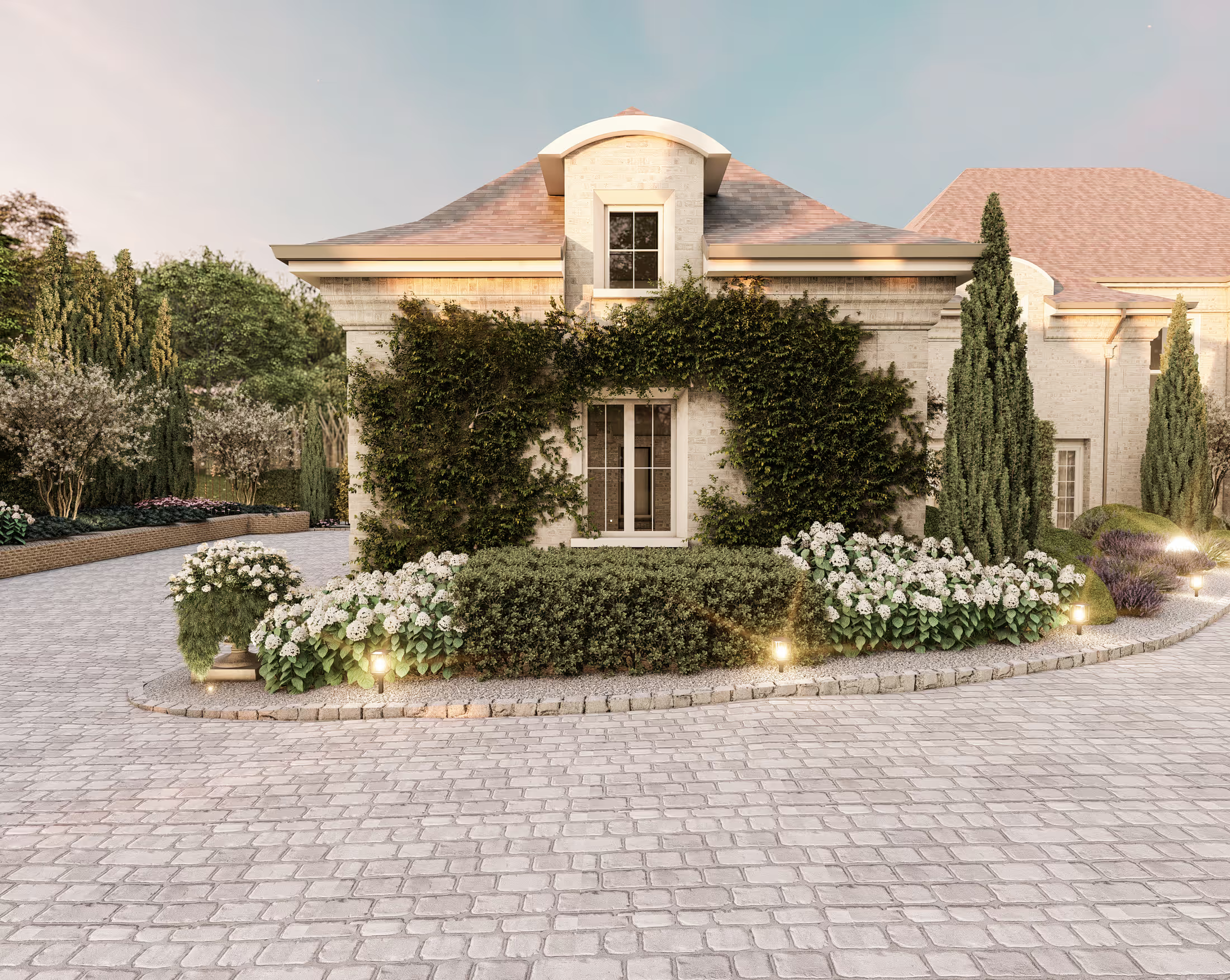
Planning a Texas yard? Send me the space.
Photos, a rough sketch, a Pinterest board: whatever you have is enough to begin. Most projects go from first message to build-ready files in a few weeks.